
Joint session of Pakistani parliament: Controversial motion to introduce controversial electoral reform bill passed despite opposition protests
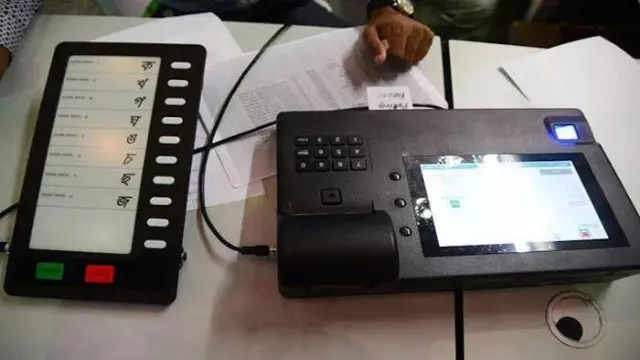
A joint sitting of Pakistan's parliament is underway in Islamabad, and despite opposition protests and objections, a motion to introduce a controversial electoral reform bill in the country has been passed.
Under this bill, two amendments have been proposed in the Election Act of 2017 which are related to the use of electronic voting machines and granting voting rights to Pakistanis living abroad.
221 members of the Assembly voted in favor of the electoral reform movement, while 203 voted against.
During the joint sitting, a legal dispute arose as to whether the government bill would require a majority of the members present in the House or a combination of the number of members of the National Assembly and the Senate.
Adviser to Parliamentary Affairs Babar Awan was of the view that the decision would be taken by the votes of the people present in the House at present, while PPP Chairman Bilawal Bhutto, referring to the rules, said that the amendment should be approved in the joint sitting. Therefore a majority is required in both the houses and if the government does not have 222 votes then the law cannot be passed.
On this, the Speaker of the National Assembly Asad Qaiser said that in this case the constitution is considered and not the rules and he ordered to continue counting on the issue of legislation.
According to the agenda of the joint sitting of Parliament, a total of 27 Bills will be presented for approval in this Session, in addition to amendments to the Election Act. The Corporation Amendment Bill is also included.
The most controversial of these proposed bills is electoral reform, which leaves a clear gap between the government and the opposition.
Opposition leader Shahbaz Sharif, in his address to the meeting, called for a full consultation on electoral reforms by postponing the joint meeting, while PPP chairman Bilawal Bhutto Zardari said that if the government could pass the electronic voting law, it would They are announcing not to recognize the next election from today.
The joint sitting started with a delay of one hour on Wednesday. When the Speaker National Assembly invited Babar Awan to present the electronic voting bill for approval under item two ie Election Amendment Bill, Babar Awan replied that the opposition But she wants to talk to you, so she should be postponed for now.
After that, addressing the assembly, opposition leader Shahbaz Sharif said that it was wrong to bulldoze the law by violating the traditions of the parliament. The government had no intention of consulting. The purpose of postponing the last meeting was to complete the vote and gain time to convince the coalition parties, ”he said.
"The idea is to bulldoze the bills, but it is difficult for them to get votes from the people, so they want to prolong the elected government in some way through the machine," he said.
He termed the EVM as an "evil and vicious machine" and said that "the intention of the government is fast and therefore they want to pass black laws." What is its purpose? Let something happen so that the people do not have to go and the EVM fulfills their purpose.
Shahbaz Sharif said that despite the objections of the body which is responsible for holding transparent elections, the government wants to change the election laws.
The Leader of the Opposition told the Speaker that he was the caretaker of this House and if he allowed these bills to be bulldozed, history and the people would not forgive him. On this, Asad Qaiser said, "I will not do anything against the constitution and laws."
"We don't want to bring black law, we want to wash away the soot of the past."
Federal Foreign Minister Shah Mehmood Qureshi, while replying to the Leader of the Opposition, said, "Today will be a historic legislation that will remove the mistakes of the past and lay the foundation for transparent elections in the future."
He said that the government "does not want to bring any black law but wants to wash away the soot of the past".
The foreign minister said his party had not rushed the meeting to the opposition. The date of the meeting was postponed to the 11th. Only because some of our colleagues had questions which the meeting was postponed to remove and after convincing them the meeting was called again.
Shah Mehmood Qureshi said that EVM is not an "evils and evils machine but this machine will bury the evils designs that have been making the election controversial till date".
"You are trying to snatch the powers of the Election Commission and hand them over to NADRA."
After the reply of Shah Mehmood Qureshi, when the Speaker invited the Chairman PPP Bilawal Bhutto to address him, he said to the Speaker, "You have done what you want to do, but do not lie to this House. '
Bilawal Bhutto said that PML-N in its time had enacted such legislation on elections on which all the opposition parties of that time including PTI agreed.
"If you had legislated with us, the next elections would not have been controversial and it would have been a victory for Prime Minister Imran Khan. But when you try to pass the voting machine law despite the objections of the Election Commission and the opposition, we They declare that they will not accept the next election.
Bilawal said, "We stand side by side with the Election Commission and as long as they have objections, we will also have objections." You are trying to take away the powers of the Election Commission and give it to NADRA.
He said that the government wants to legislate unilaterally, by force, in its own way and "even if the government passes this law, we will go to court." We have made a constitution and we will challenge and defeat the violation of this constitution in court.
Talking about the voting of Pakistanis abroad, Bilawal Bhutto said that we also want to give the right to vote and representation to Pakistanis abroad. We say that just as the representatives in Azad Kashmir represent the Kashmiris abroad, we should adopt the same method.
He also said that the opposition would not allow the attempt to use this House to bring SBP under IMF to succeed.
Bilawal Bhutto said that the SBP should be accountable to the parliament and the court and according to your legislation, the SBP would be neither accountable to the House nor to the court but above the House. We will not allow you to tie the hands of Parliament. We will challenge that in court, too. "
It is to be noted that according to the provisions of the proposed bill, the Governor SBP can be removed by any court only in case of serious misconduct and any government body against the SBP Governor, Deputy Governors, Board of Directors in connection with government responsibilities. Any kind of investigation can only be done if the SBP board itself approves it.
With this amendment, it is being assumed that the Governor of SBP will not be accountable to any institution of Pakistan. Under the proposed law, the tenure of several senior officials, including the SBP governor, is also being changed.
Similarly, the Monetary and Fiscal Coordination Board has been abolished and only consultation between the SBP Governor and the country's Finance Minister has been proposed. This reduces the government's ability to influence the SBP.
Speaking to recently, economist Dr Qaiser Bengali termed the amendments as negative and said that the country's economy was being toyed with in the name of sovereignty.
He said that the economy was being harmed by making the SBP law independent by amending it under the terms of IMF. Qaiser Bengali said that after these amendments, the role of the government would end and SBP would repay loans to international financial institutions.
He said that according to the amendment in the law, when the SBP's reserves are depleted, the government will have to repay the money in any case, for which it will have to obtain a foreign loan, ie to repay the loan. More new loans will have to be taken.
The government is confident of legislation
In addition to Prime Minister Imran Khan and members of his party's assembly, leaders of the ruling coalition and opposition parties and members of parliament are present to attend the joint sitting.
In response to questions from the media on his arrival at Parliament, Prime Minister Imran Khan said that "whenever a player enters the field, he is ready for any situation."
The government, after consulting with leaders of its allied parties, including the Pakistan Muslim League-Q and other smaller political parties, including the MQM Pakistan, now appears confident of legislating.
Ahead of the meeting, Information Minister Fawad Chaudhry said that the government would easily succeed in enacting legislation in the joint session and it has the full support of the coalition parties.
Talking to media before the joint sitting of the parliament, Fawad Chaudhry said that both the laws are very important, one of which is Electronic Voting Machine (EVM) and the other is the bill on the right of Pakistanis living abroad to vote.
In his message on Twitter, he also said that the PTI would fulfill another election promise by passing a law allowing Pakistanis in overseas to vote in elections.
He said,''Electronic voting machines and the voting law of overseas Pakistanis will be a milestone in strengthening democracy in Pakistan''.
The government had earlier adjourned a joint sitting of parliament convened last week after concerns over electoral reforms were raised by its allies, particularly the PML-Q and the MQM-Pakistan.
In the context of the joint session, the ruling coalition appears to have a majority of 17 votes in the National Assembly and 15 votes behind the opposition in the Senate. In addition, the absence of members from both sides can affect these figures.