
Controversial Electoral Reforms: Prime Minister Imran Khan arrives in Parliament to attend joint session
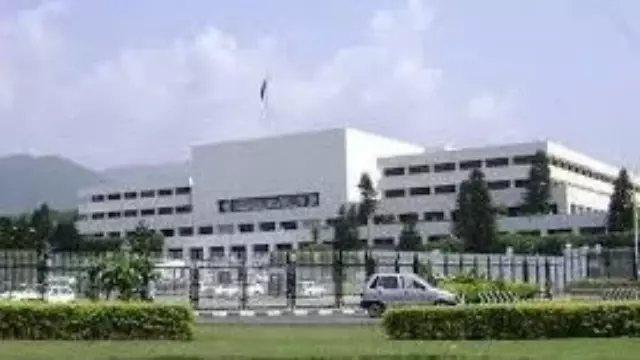
A number of important but controversial bills, including electoral reforms, are expected to be introduced in the joint sitting of Pakistan's parliament today.
The joint sitting is expected to begin at 12 noon today, with government leaders, including opposition leaders, and Prime Minister Imran Khan arriving in Parliament. In response to questions from the media on his arrival at Parliament, Prime Minister Imran Khan said that "whenever a player enters the field, he is ready for any situation."
The government had earlier adjourned a joint sitting of parliament convened last week after concerns over electoral reforms were raised by its allies, particularly the PML-Q and the MQM-Pakistan. After consultations with leaders of other smaller political parties, including the ruling coalition parties, including the Pakistan Muslim League-Q and the MQM-Pakistan, the government now appears confident in approving the bills.
However, the opposition claims that it will take all possible steps to prevent such legislation, which has not been consulted by the opposition.
The most controversial of the proposed bills being debated today is electoral reform, in which two questions are crucial. The first is the issue of the right of Pakistanis living abroad to vote and the second is the use of electronic voting machines in the upcoming general elections. There is a clear gap between the government and the opposition on these two questions.
There is also an opinion on whether the government needs a constitutional amendment for electoral reform or whether the bill can be passed by a simple majority. In the context of the joint session, the ruling coalition appears to have a majority of 17 votes in the National Assembly and 15 votes behind the opposition in the Senate. In addition, the absence of members from both sides can affect these figures.
Electronic voting machine

One clause in the Electoral Reform Bill relates to the use of electronic voting machines in the forthcoming general elections.
Prime Minister Imran Khan has called for the use of electronic voting machines in the upcoming general elections in the country and has also set aside a separate fund while opposition parties have categorically rejected the use of electronic voting machines while the Election Commission Has also expressed its concerns.
Mohsin Shahnawaz Ranjha, a member of the National Assembly from the Pakistan Muslim League-Nawaz, the largest opposition party, told a few days ago that the literacy rate in Pakistan was not so satisfactory. "How can a voting machine be used properly in a country where the majority of people do not know how to use an ATM machine to withdraw money?"
Meanwhile, Shazia Murree, a member of the Pakistan People's Party's National Assembly, told that such controversial legislation gives "influential institutions of the country" more opportunities to interfere in democratic institutions.
He had said that the hasty amendments introduced by the government in the Election Act 2017 show that there is something black in the pulse.
Meanwhile, Information Minister Fawad Chaudhry has said that electronic voting machine is the most effective in terms of transparency of voting and according to him people have the most trust in this machine.
Election Commission Concerns
The Election Commission had expressed its concerns about the use of electronic voting machines in the Electoral Reform Bill and the forthcoming general elections, and said that in order to do so, it was necessary to amend the Constitution. He insists on getting it approved by the parliament and implementing it.
Election Commission officials had expressed their concerns about the use of EVMs in a 37-point written statement to the Senate Standing Committee on Parliamentary Affairs.
The biggest point of these concerns is that the electronic machine is not reliable and its use cannot prevent fraud and this machine can be hacked at any time.
The ECP also mentioned in its reservations that the software of this machine can be changed at any time. Besides, the ECP also said that it is difficult to believe that every machine has a It will work properly in a day.
The Election Commission has said that due to low literacy rate in the country and lack of awareness among the voters about the use of this machine, it would not be appropriate to use this machine in elections.
The ECP has also mentioned in its reservations that there is very little time to train the staff of the ECP in the use of this machine. There is no consensus among the holdings ie political parties and in such a situation the question of neutrality in elections will arise.
In its reservations, the ECP said that the issue of electronic voting machine has been dealt with hastily and hastily, which is a negation of international standards.
The ECP has also mentioned in its reservations about the electronic voting machine that it does not address low voter turnout, misuse of state machinery, election rigging, deployment of dishonest polling staff and electioneering disputes. Can stop
The ECP has also mentioned in its reservations the European countries where the use of electronic voting has been stopped due to objections raised on this machine. These countries include Germany, the Netherlands, Italy, France and Ireland.