
The war in Ukraine and the increasing threats to the economy of the European Union, the dollar rose to the level of the euro
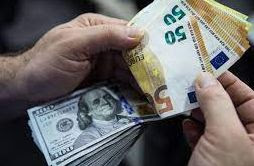
The European single currency has fallen to the lowest level against the dollar. Traders believe that the economic key to the union is in the hands of Russia.
The fall in the value of the euro against the dollar due to the war in Ukraine and the growing threat to the EU economy has brought the two currencies ''to parity for the first time in two decades.''
The European single currency has fallen to the lowest level against the dollar, a level not seen since late 2002, the year it was officially introduced, but traders believe the euro will recover, according to the British broadcaster.
Experts say Europe also needs to avoid the risk of Russian gas cuts, which would raise electricity prices and force eurozone countries to curtail some industrial activity.
That said, if gas flows from Russia return to normal or at least stop falling after the Nord Stream 1 maintenance shutdown ends next week, market concerns about a gas crisis in Europe will be somewhat eased. should be reduced.
Russian gas company Gazprom has warned that it cannot guarantee that the pipeline will function properly. French President Emmanuel Macron even said that Russia is using fuel as a "weapon of war".
Stephen Innes, an analyst at SPI Asset Management, warned that if Nord Stream 1 does not recover, the euro will continue to fall and economic shockwaves will be felt around the world as the European energy crisis triggers a recession.
Rabobank analyst Jane Foley says that recession will inevitably mean that the market will become more concerned about the risks of the fragmentation of the eurozone.
Like other central banks, the European Central Bank (ECB) is trying to avoid stifling the economy by raising rates too quickly, but it is also concerned about a possible market rupture with wide spreads in lending rates across the eurozone. have to worry.
The European Central Bank has so far maintained an ultra-loose monetary policy to support the economy, while the US Federal Reserve has instead raised rates and pledged to continue that policy to combat inflation. However, the European Central Bank will announce its monetary policy decision and has indicated that it will raise rates for the first time in 11 years.
Analysts say that if the ECB aims to boost the euro, it will have to increase by 50 basis points in July, signaling that another 75 basis points could be added for September. It is said that this rapid policy adjustment will help in curbing inflation which will help in reducing the risk that the policy can be further reduced.
According to economists, the reason for the decline of the euro is the increase in the value of the dollar, which has performed better than other currencies since the middle of 20221.